
„Doctor, they told me the bone is healed. So why does it still hurt?”
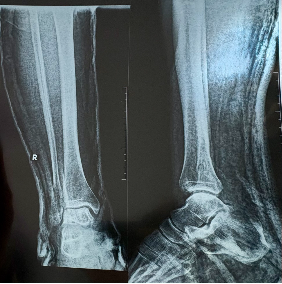
This is one of the questions I hear most often in my office. Many times the patient comes for a check-up with the X-ray in their hand. They look at it hopefully. They expect to hear that everything is fine and that they can return to their previous life.
The X-ray confirms the fracture has healed. Yet, when he tries to climb stairs, lift a bag, or walk for a longer period, the pain returns. At that point, confusion also sets in.
“If the bone has healed, then why does it still hurt?”
This is a perfectly natural question, and surprisingly, the answer isn't always in the X-ray.
An X-ray sees the bone. It doesn't see the whole story.
In medicine, we tend to rejoice when images look good. It's natural. But the body doesn't work like a photograph.
A fracture isn't just a broken bone.
At the moment of trauma, muscles, tendons, ligaments, blood vessels, nerves, and even the way the brain perceives movement and pain are also affected.
All these structures need to recover together, and sometimes, they need more time than bone.
I like to explain things to patients using a simple comparison.
Imagine a house that has been affected by an earthquake. Builders are repairing the walls and the roof. Viewed from the outside, the house appears whole again.
But inside? The electrical system might still be affected. Pipes could have cracks. The parquet floor might creak. Some doors still don't close properly.
The house exists again, but it doesn't work perfectly yet.
This is exactly what happens after a fracture. The X-ray tells us the “walls” have repaired. However, it doesn't tell us if the entire organism has returned to its normal functioning.
Healing isn't just “gluing” the bone
Here I think the biggest confusion arises. Patients use the word healing to describe the disappearance of pain. We doctors sometimes use the same word for bone consolidation, but the two are not always the same thing.
In reality, there are two different processes. The first is the biological healing of the fracture. The second is the functional recovery of the entire limb, and this can continue for months after X-rays show the bone is healed.
Pain doesn't always come from bone.
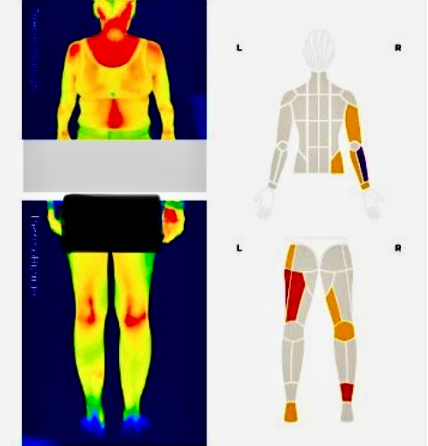
This is probably the thing that surprises patients the most. Pain can come from many other structures: muscles that have been immobilized, tendons that were overused when you started walking again, joints that have lost mobility, nerves that are still adapting after the trauma, or even the way the nervous system continues to process pain.
That's why two people with the same fracture can have completely different recoveries.
The body learns to protect itself
There is a phenomenon we observe very often after a long period of immobilization. Without realizing it, the patient begins to protect the affected area, walks differently, shifts their weight onto the other leg, holds their shoulder in a protective position, uses the affected hand less, etc.
Initially, these adaptations are useful. The problem is that the body can retain them even after the fracture has healed, and then new pains appear in other regions of the body, which are no longer directly related to the bone.
In recent years Research has changed the way we look at recovery from a fracture. Today we know that healing isn't just about bone consolidation. Muscles, tendons, nerves, and joints must regain their mobility, strength, and coordination. Only then can we say that the body has truly recovered.
Instead of listing technologies, I would integrate them into a story:
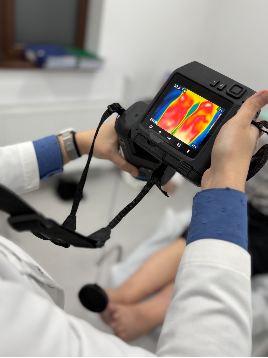
At Expert Laser Center, the first thing we try to find out is not where it hurts, but why it continues to hurt. Sometimes the cause is a mobility limitation. Other times it's an overused tendon, residual inflammation, or a nerve still adapting after trauma. Therefore, the evaluation may include medical thermography, musculoskeletal ultrasound, and a complete functional analysis, to understand the pain mechanism and build a personalized therapeutic plan.
Modern recovery means more than the disappearance of pain
In recent years, medical recovery has changed significantly. If in the past the main objective was pain control and gradual resumption of activities, today we know that the real challenge is to support the biological processes by which the body repairs its tissues.
We cannot rush the organism's biology beyond its natural limits. However, we can create the optimal conditions for it to function as efficiently as possible.
This is the principle on which modern regenerative medicine is based.
Why is the Expert Laser Center approach different?
The Expert Laser Center We don't treat the X-ray or the result of an MRI. We treat the patient and try to understand why the body continues to send pain signals, even when the fracture appears healed.
Every therapeutic plan begins with a comprehensive functional assessment. We analyze mobility, muscle strength, biomechanical chains, movement quality, and the biological stage of healing. Depending on each case, the assessment can be supplemented with medical thermography, musculoskeletal ultrasound, and other modern functional analysis methods.
Our goal is not just for the patient to have a nice X-ray, but to be able to walk, climb stairs, play sports, or return to daily activities without limitations and with confidence in their own body.
The role of photobiomodulation in fracture healing
Within this process, one of the therapies that has attracted increasing interest in the scientific literature is photobiomodulation (Photobiomodulation – PBM).
Unlike surgical lasers, which cut or vaporize tissues, photobiomodulation uses carefully calibrated doses of light to interact with cells. The light energy is absorbed by mitochondria, where it helps stimulate ATP production – the cell's main energy source – and can influence processes involved in inflammation control, tissue regeneration, and functional recovery.
In recent years, Platelet-Rich Plasma (PRP) has become one of the most intensely studied areas of regenerative medicine, with hundreds of clinical and experimental studies published for musculoskeletal, neurological, and sports-related conditions.
Giant Laser Cluster – When Treated Surface Matters
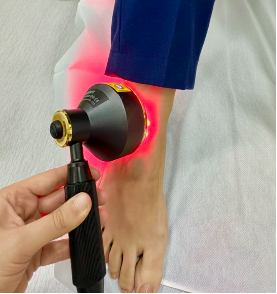
One of the advantages Expert Laser Center this is the use of the system Giant Laser Cluster (GLC) developed by THOR Photomedicine, an international leader in photobiomodulation research and development.
Unlike a spot laser, which acts on a small surface area, the Giant Laser Cluster allows for the treatment of extensive anatomical regions by distributing light energy uniformly across the entire affected area. This is particularly useful in recovery from fractures, orthopedic surgeries, sports injuries, or other conditions involving bone, muscles, tendons, and soft tissues simultaneously.
The treatment is non-invasive, painless, and integrated into a complex recovery plan, adapted for each patient.
An infrastructure built around evidence-based medicine
Protocols used at Expert Laser Center are developed based on international scientific literature and the principles of evidence-based medicine (Evidence-Based Medicine).
The center operates within the same medical ecosystem as Innovation Medical Center, associated center and European partner of Sigmund Freud University Vienna and and AALZ Aachen (Germany), being affiliated International Society for Laser Dentistry (ISLD). In addition, our activity is inspired by research and educational programs developed by THOR Photomedicine, a global benchmark in photobiomodulation.
For us, technology represents not just high-performance equipment, but a continuous investment in education, research, and the implementation of scientifically validated protocols, so that patients in Romania can benefit from therapies used in internationally renowned medical centers.
The Science of Healing
The body has an extraordinary capacity for regeneration, but each tissue follows its own biological rhythm.
The role of modern medicine is not to force these processes, but to create optimal conditions for them to occur as efficiently and safely as possible. At Expert Laser Center, each treatment is built around this principle: supporting natural healing mechanisms through scientifically validated technologies and personalized, evidence-based protocols.
📍 Expert Laser Center – Bucharest
🌐 Website: https://expertlaser.ro
📞 Telephone +40753666111
Author: Dr. Anca Adam
Specialist in Physical Medicine and Rehabilitation, neurological recovery compartment, Competence in Traditional Chinese Medicine (Tai Yuan China), Expert in Laser Acupuncture & Medical Thermography (Barcelona, Spain) – LSO (Laser Safety Officer) AALZ Aachen Germany

 Romanian
 English