
THOR Photomedicine - medical photobiomodulation for pain and recovery
THOR is a system medical photobiomodulation care use light red and infrared close, provided print applicators laser and LED for produce answers photobiological treatments that do not involve incisions or tissue ablation. In medical rehabilitation, it can be incorporated to manage pain, modulate inflammation, support tissue repair, and promote functional recovery, provided there is a medically established indication. The outcome does not depend solely on the device: the diagnosis, the target tissue, the wavelength, the dose, the duration, the frequency of sessions, and proper integration with treatment of the underlying cause all play a role.
The core idea
Photobiomodulation is not «generic light applied.» At Expert Laser Center, THOR is used as part of a recovery plan built around diagnosis, functional goals, and re-evaluation.
Pain management
Contribute to reducing acute or persistent pain, depending on the pain mechanism.
Modulation of Inflammation
It influences local inflammatory signaling, complementing etiological treatment.
Tissue repair
It can support the biological processes involved in the recovery of muscles, tendons, nerves, skin, and other tissues.
Integrated recovery
It can complement therapeutic exercise, manual therapy, load management, medication treatment, or wound care when these are indicated.
What, exactly, is the THOR system?
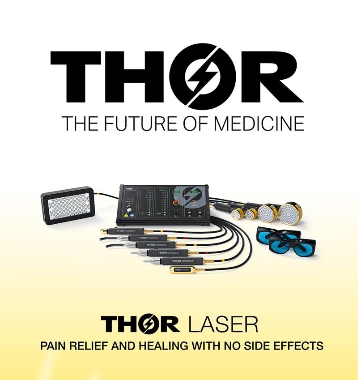
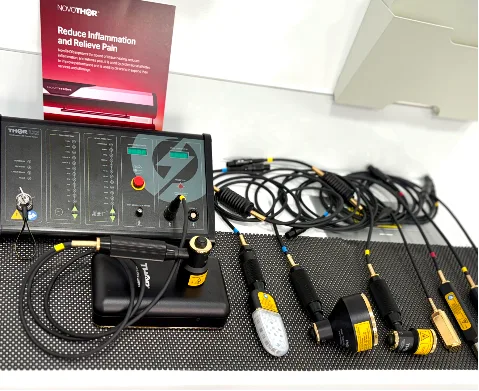
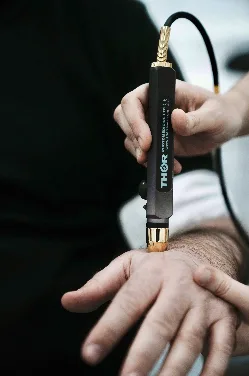
THOR Photomedicine is a modular medical system for photobiomodulation, consisting of a control unit and interchangeable therapeutic applicators. The applicators emit red and/or near-infrared light and are chosen based on the treated area, target depth, and clinical objective. The system does not cut, vaporize, or remove tissue, unlike a surgical laser.
How does photobiomodulation work at the cellular level?
Red and near-infrared light penetrates the tissue and is absorbed by cellular structures that are sensitive to specific wavelengths. One of the central hypotheses involves cytochrome c oxidase, a component of the mitochondrial respiratory chain. The interaction of photons with these structures can temporarily alter electron transport, the availability of nitric oxide, the mitochondrial membrane potential, and the production of adenosine triphosphate (ATP).
In parallel, controlled modifications of reactive oxygen species, intracellular calcium, and certain signaling and gene transcription pathways may occur. These processes can influence the inflammatory response, cellular metabolism, microcirculation, and the activity of cells involved in tissue repair. The mechanisms are not identical across all cell types, and the literature continues to debate the relative importance of each biological pathway.
| Why the dose mattersIn photobiomodulation, more does not automatically mean better. The response can be biphasic: an insufficient dose may not produce the desired effect, while an excessive dose may diminish the biological response. Therefore, the power of the device cannot be evaluated separately from irradiance, energy, surface area, time, and target depth. |
The four clinical objectives pursued in recovery
1. Analgesia and pain control
In certain protocols, photobiomodulation temporarily alters the excitability of nociceptive fibers and the transmission of pain signals. The clinical effect depends on the type of pain—nociceptive, inflammatory, myofascial, or neuropathic—and on the choice of parameters.
2. Modulation of inflammation and edema
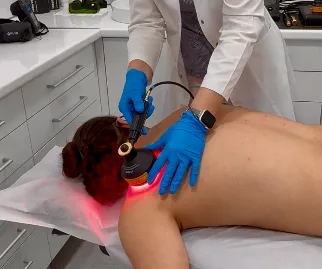
Therapeutic light can influence mediators and cellular pathways involved in inflammation. In some THOR protocols, both the affected region and relevant lymphatic areas are treated, with the objective of supporting edema control. This approach complements, as appropriate, compression, drainage, mobilization, infection control, or treatment of the underlying disease.
3. Tissue repair support
PBM is being studied for its effects on fibroblasts, extracellular matrix synthesis, angiogenesis, and tissue remodeling. In practice, it is used as an adjunct in musculoskeletal injuries, following surgical procedures, and in certain wounds. It does not replace suturing, debridement, revascularization, glycemic control, treatment of infection, or mechanical unloading when these are necessary.
4. Neuromuscular and functional recovery
In peripheral nerve injuries and in some neuropathic pains, photobiomodulation is used for its effects on neural metabolism, inflammation, and nociceptive transmission. In musculoskeletal pathology, the ultimate goal is not only pain reduction, but the resumption of movement and function. For this reason, PBM is frequently associated with therapeutic exercise and functional re-education.
THOR Method: we don't just treat where it hurts
THOR protocols use a multi-level clinical logic. Depending on the diagnosis, the plan may include the injured or painful tissue, relevant nerve structures, trigger points, and associated lymphatic zones. This approach explains why two people with pain in the same region may receive different treatments.
| Target | Why it can be included | Example |
|---|---|---|
| Affected tissue | Local focus: inflammation, repair, pain | tendon, joint, muscle, wound |
| The nerve | Neuropathic pain or sensory deficit | peripheral nerve, root, plexus |
| Trigger points | Myofascial component | tight bands and trigger points |
| Lymphatic zones | Edema and regional drainage | clinically relevant lymph node chains |
What conditions can be evaluated for THOR photobiomodulation?
THOR photobiomodulation is used in the recovery of a wide spectrum of musculoskeletal, neurological, and postoperative conditions. For each pathology, the physician selects the protocol based on the diagnosis, tissue characteristics, and clinical objective, correlating the indication with data available in the specialized literature.
Spine and axial pain
- mechanical neck and lower back pain
- cervical or lumbar spondylosis
- cervical and lumbar radiculopathy/sciatica
- facet syndrome and sacroiliac dysfunction
- whiplash sequelae
Joints and osteoarthritis
- gonarthrosis, coxarthrosis, and shoulder osteoarthritis
- osteoarthritis of the hand, foot, and other selected joints
- joint pain and stiffness
- inflammatory arthritis – exclusively as adjuvant symptom management, in coordination with the attending physician
Tendons, fascia, and overuse
- Achilles and patellar tendinopathy
- rotator cuff and biceps tendinopathy
- lateral or medial epicondylitis
- Plantar fasciitis
- iliotibial band syndrome and other selected tendinopathies
Sports and traumatic injuries
- sprains and contusions
- muscle strains
- medically evaluated partial ligament injuries
- bursitis and impingement syndromes
- delayed onset muscle soreness – DOMS
- recovery after fracture, following stabilization and according to orthopedic instructions
Neuropathic pain and peripheral nerves
- selected peripheral neuropathies
- diabetic neuropathy
- chemotherapy-induced neuropathy – in oncological coordination
- carpal and cubital tunnel syndrome
- brachial plexus or peripheral nerve injuries
- complex regional pain syndrome – CRPS
- trigeminal neuralgia and other neuropathic pain, after differential evaluation
Postoperative and wounds
- postoperative pain and edema
- supporting postoperative wound healing
- chronic wounds and pressure ulcers
- diabetic foot ulcer – adjuvant to standard care
- burns and selected superficial injuries
Oncological rehabilitation and treatment side effects
- oral mucositis
- chemotherapy-induced peripheral neuropathy
- lymphedema after breast cancer or head and neck treatments
- post-radiotherapy radiodermatitis and fibrosis
- xerostomia and hyposalivation
- trismus
TMJ and orofacial pain
- temporomandibular disorder-associated pain
- myofascial pain of the masticatory muscles
- functional limitation associated with pain
- cervical component and relevant trigger points
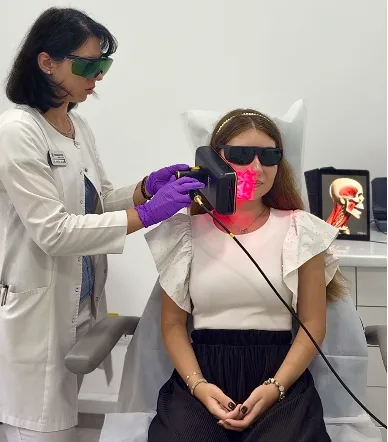
Important for the patient The same pain can have very different causes. In the case of the shoulder, the source can be the tendon, the bursa, the joint, the cervical spine, or a nerve structure. Therefore, at Expert Laser Center, treatment does not start from the simple location of the pain, but from the identification of the involved structure. Thus, THOR photobiomodulation can be applied in a targeted manner, choosing the applicator and protocol according to the diagnosis and clinical objective of each patient.
|
How do evaluation and treatment take place at Expert Laser Center?
- The consultation starts with the discussion with the patient, the symptom history, the functional investigations, and their diagnosis.
- The painful region, mobility, function, sensitivity, strength, and signs that may indicate the need for further investigation or a multidisciplinary approach are examined.
- The applicator, anatomical targets, and parameters are selected based on tissue, depth, and clinical objective.
- Tracking criteria are established: pain, mobility, exercise tolerance, function, sleep, sensitivity, or wound evolution.
- The response is re-evaluated, and the plan can be continued or adjusted.
What does the patient feel during the session?
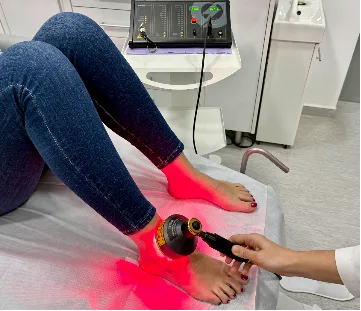
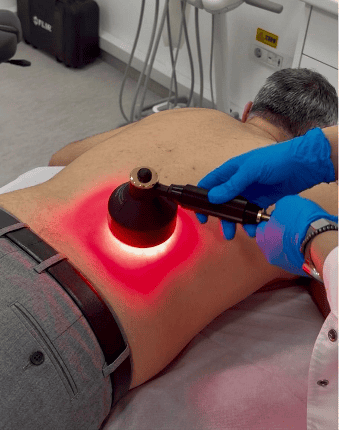
The treatment is non-ablative and does not involve incisions, injections, or instrument vibration. Depending on the applicator and the area, the patient may perceive discrete warmth, the slight pressure of the probe, or almost nothing. The experience varies depending on individual sensitivity and the treated tissue.
How many sessions are needed?
There is no universal number. Acute conditions may be treated more frequently at first, and chronic ones often require a series of sessions and re-evaluations. The plan depends on the diagnosis, the duration of symptoms, severity, response, and association with the recovery program. Promising a result after a fixed number of sessions is not medically correct.
Safety, precautions, and situations requiring adaptation
PBM has a favorable safety profile when used correctly, but it is not without rules. Safety depends on the device, wavelength, class, dose, treated area, and operator training. For laser applicators, the patient, operator, and bystanders wear wavelength-appropriate eye protection.
- The laser beam must not be applied on or near the eyes without specific protection and protocol;
- a suspicious or undiagnosed lesion must be evaluated before treatment;
- during pregnancy, application over the gravid uterus is avoided, and other regions are treated only after a benefit-risk assessment;
- in oncology, PBM is used for established supportive indications and in coordination with the attending physician;
- photosensitizing medications, sensory disturbances, active hemorrhage, and heavily pigmented or tattooed skin may require precautions, testing, and dose adjustment;
- Photosensitive epilepsy requires the avoidance of inappropriate pulsed light stimulation and individual evaluation.
Why THOR at Expert Laser Center?
PBM dedicated medical device
Modular system with control unit and laser/LED applicators selected according to the target.
Giant Laser Cluster
THOR applicator with 80 810 nm laser diodes, designed for controlled coverage of larger surface areas and deep musculoskeletal targets.
Professional protocols
Library of guideline protocols, correlated with clinical evaluation and the device's instructions.
Monitoring
Treatment is monitored through clinical and functional criteria, not just by the immediate impression of comfort.
Laser safety
The team includes Laser Safety Officer training - AALZ Aachen, with a role in implementing protective measures.
Interdisciplinary approach
Medical recovery, functional assessment, and collaboration with relevant specialties for the patient's diagnosis.
Training and international networking
Expert Laser Center aims to integrate scientific literature and international standards into clinical practice. The team's training includes laser safety education through AALZ Aachen, as well as academic and professional connections with AALZ and Sigmund Freud University Vienna. These elements support a culture of responsible laser use, without replacing medical qualification and the evaluation of each individual case.
THOR photobiomodulation systems are used in clinical, academic, and research activities by institutions such as Harvard Medical School, Massachusetts General Hospital, Massachusetts Institute of Technology (MIT), University of Pennsylvania, and New York University. The technology is also present in British military structures—the British Army, Royal Air Force, and Royal Navy—as well as in high-performance sports medicine, including within Team GB and among elite teams and athletes.
This international presence reflects the maturity of THOR technology, its integration into demanding professional environments, and the ongoing interest in photobiomodulation for pain management, inflammation modulation, and tissue recovery. At Expert Laser Center, this same technology is integrated into individualized protocols, established according to the diagnosis, the targeted tissue, and the patient's functional goals.
Frequently Asked Questions
THOR is a photobiomodulation medical system with laser and LED applicators. It is not a surgical laser and does not aim for intense heating or tissue destruction.
No. The effect depends on wavelength, irradiance, energy, area, time, and applicator geometry. In the clinic, parameter selection starts with the diagnosis and the target tissue.
No. Discreet warmth or probe pressure may be perceived, and the experience varies depending on the area and individual sensitivity.
It can be a non-pharmacological option for certain indications, but it does not automatically replace medication and is not suitable for every cause of pain. The decision is made medically.
It can be integrated for pain control and function support in certain forms of osteoarthritis. It does not automatically rebuild cartilage and does not replace exercise, weight control, injections, or surgery when these are indicated.
In disc herniation, photobiomodulation is integrated into the recovery program for pain control, inflammation modulation, and the reduction of the associated muscular or radicular component. The THOR protocol is adapted to the affected level, symptom distribution, and functional goals, following the clinical and neurological evaluation required for each case.
Yes, it is included for pain, edema, and tissue recovery, with the agreement of the surgical team and after ruling out complications.
It is being investigated and used as an adjuvant in some neuropathies. The response depends on the cause, severity, duration, and protocol. Progressive motor deficit or newly onset numbness requires prompt medical evaluation.
It complements standard care, but does not replace debridement, infection and glycemic control, vascular assessment, dressings, and offloading.
PBM has well-studied supportive indications, such as oral mucositis. The application is done for the adverse effects of the treatment, not as a treatment for the tumor, and must be coordinated with the oncologist or radiation oncologist.
The number cannot be correctly determined without a diagnosis. Acute and chronic conditions have different rates, and the continuation is decided based on the measurable response.
Because some applicators are laser sources and the eye must be protected against direct or accidental exposure, even if the therapeutic objective is not thermal.

Specialized literature
- de Freitas LF, Hamblin MR. Proposed Mechanisms of Photobiomodulation or Low-Level Light Therapy. IEEE J Sel Top Quantum Electron. 2016. Link
- Hamblin MR. Mechanisms and Mitochondrial Redox Signaling in Photobiomodulation. Photochem Photobiol. 2018. Link
- Hamblin MR. Mechanisms and applications of the anti-inflammatory effects of photobiomodulation. AIMS Biophys. 2017. Link
- Stausholm MB et al. Efficacy of low-level laser therapy on pain and disability in knee osteoarthritis: systematic review and meta-analysis. BMJ Open. 2019. Link
- Chow RT et al. Efficacy of low-level laser therapy in the management of neck pain: systematic review and meta-analysis. Lancet. 2009. Link
- Tripodi N et al. The effect of low-level red and near-infrared photobiomodulation on tendinopathy: systematic review and meta-analysis. 2021. Link
- Clijsen R et al. Effects of low-level laser therapy on pain in patients with musculoskeletal disorders: systematic review and meta-analysis. Eur J Phys Rehabil Med. 2017. Link
- Oliveira MFD et al. Low-intensity LASER and LED photobiomodulation on pain control of the most common musculoskeletal conditions. Eur J Phys Rehabil Med. 2022. Link
- da Silva JLM et al. Photobiomodulation: systematic review and meta-analysis of parameters used in diabetic foot ulcers. 2020. Link
- Bensadoun RJ et al. Tumor safety and side effects of photobiomodulation for cancer treatment toxicities: systematic review. 2020. Link
- Robijns J et al. Photobiomodulation therapy in management of cancer therapy-induced side effects: WALT position paper 2022. Link
- THOR Photomedicine – What is Photobiomodulation? Link
A correct treatment begins with the right question: what structure is producing the symptoms?
If you have persistent pain, inflammation, limited mobility, a slowly recovering injury, or neuropathic symptoms, schedule an evaluation at Expert Laser Center. We will determine how THOR photobiomodulation is indicated in your case, what objectives we can pursue, and how it integrates into your recovery plan.
Expert Laser Center | 10 Prof. Grigore Cobălcescu St., Sector 1, Bucharest | 0753666111

 Romanian
 English