
The locomotor system comprises all the organs that enable an individual's movement: bones and joints, muscles, tendons, and ligaments. Locomotion is a complex function that involves, in addition to the components of the locomotor system, sensory organs and their sensory receptors through which information is gathered regarding the human body's relationship with the environment. The information is transmitted neurally to the central nervous system where it is analyzed and sent to the muscles, which move the bones, thus achieving locomotion.
Bones are anatomical structures that combine strength and elasticity in the most efficient way possible. They consist of 10–50% water, 30–40% (organic: ground substance, elastic fibers, collagen fibers, cells; and inorganic: sodium, phosphate, and calcium) and 30% fat. They serve a supportive and protective role, play a passive role in locomotion, act as a reservoir for calcium and phosphoric acid, and even have an antitoxic role (for example, lead, arsenic, and radium are temporarily retained).
Joints form the connections between bone ends, providing support in movement. They include the joint capsule, ligaments, and synovial fluid. If the articular surfaces do not fit perfectly (articular congruence), other fibrocartilaginous structures are present: intervertebral discs, menisci, and bursae.
Muscles are anatomical structures capable of contracting, thereby producing mechanical work and, consequently, movement. In locomotion, striated muscles are the active organs. Chemically, muscle is composed of 70% water and 30% other substances, including proteins, carbohydrates, and lipids. The roles of muscles in the body are to maintain the body’s upright position (orthostatic position) and to move various segments of the body.
Muscles also have anatomical formations called appendages, which are intimately associated with the muscles, helping them function better: muscular fascia, fibrous sheaths, synovial bursae, and synovial sheaths.
Locomotor system disorders occur at the level of each of its structural elements, preventing it from performing its most important function – movement. These disorders can range from painful to painless, and from chronic to acute conditions resulting from trauma.
Any condition of this system generates a feeling of discomfort with negative influences and repercussions on people's health and, consequently, on their quality of life.
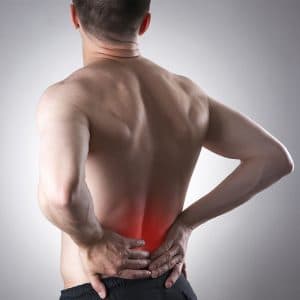
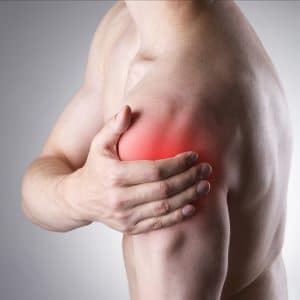
Although the main cause of musculoskeletal disorders is lack of movement, we can also have overuse injuries that lead to early-onset osteoarthritis. Among the most common conditions are fractures or rheumatic and degenerative bone processes such as osteoarthritis and arthritis, sprains or dislocations of joints, muscle contractures, strains, or tears, inflammation of tendons or bursae, and ligament ruptures.
The advantage is that laser therapy addresses all musculoskeletal conditions. According to over 4000 studies published in the largest medical study library (PubMEd – www.pubmed.govIt has been concluded in clinical laboratories and specialized studies that laser therapy has a remarkable effect on musculoskeletal, joint, and ligament trauma, successfully treating sports injuries, spinal conditions ranging from simple back pain to degenerative vertebral conditions, acute and chronic pain in all joints, muscle contractures, strains, or tears, and ligamentous conditions.
Medical Recovery - Treatment Principle:
- assumes direct approach to the affected area to support healing, remodeling, and inflammation reduction;
- action on the lymph nodes to combat swelling and inflammation;
- over nerve roots and nerves for analgesic effect;
- and on "trigger points" to reduce muscle tension and relax contracted muscle fibers.
The medical recovery mechanisms through which laser therapy works are:
- Analgesia (increases beta-endorphin release, increases nitric oxide release, decreases bradkinin levels, normalizes ion channels, stabilizes nerve cell membrane potential, increases acetylcholine release, blocks afferent c-fiber nerve depolarization);
- Reducing inflammation (inhibits the synthesis and secretion of inflammatory prostaglandins, but stimulates those that produce vasodilation and anti-inflammatory effects, stabilizes the cell membrane, Increase ATP production and its synthesis, stimulates vasodilation, accelerates leukocyte activity);
- Accelerates the repair of tissues and open wounds (stimulates the production of fibroblast cells that build large amounts of collagen, increases the number of leukocytes and macrophage activity, small capillaries are regenerated at a very rapid rate);
- Angiogenesis (stimulates the formation of new capillary vessels in the affected tissue, accelerates hematoma resorption, reduces the release of vasoactive amines);
- Increased cellular metabolic activity (stimulates ATP production and other enzymes, stimulates the plasma membrane in affected cells);
- Reduction of fibrous tissue formation (accelerates wound healing by reducing scar formation; already formed scar tissue is stimulated to remodel into elastic tissue);
- Improves nerve function (increases the respiratory rate of nerve cells, incoming nerve fibers will experience increased action potential amplitude by normalizing impulse transmission);
- Immunoregulation stimulation (directly mediates the activity of Th and Ts lymphocytes through anti-inflammatory response);
- Stimulating "trigger points" (works like an acupuncture needle-free therapy).
Treatment of Medical recovery through laser therapy provides maximum efficiency without risk of tissue damage. The laser device allows control of beam density without applying harmful pressure. Patients only feel a slight warming of the treated area.
The advantages of laser therapy include a shorter treatment period and faster positive results compared to other pain management procedures. Additionally, the method is non-invasive, non-toxic, easy to apply, extremely effective, and practically has no side effects.
Sometimes patients may experience mild discomfort or pain after treatment, due to the restimulation of the inflammatory phase, an effect that disappears 24-48 hours after the medical rehabilitation session.




 Romanian
 English