
LASER ACUPUNCTURE
NEEDLE-FREE MERIDIAN STIMULATION – ADVANCED NEUROMODULATION AND REGENERATION TECHNOLOGY
A bridge between traditional medicine Chinese and modern technology
Laser acupuncture is a natural evolution of a millennia-old therapy, adapted to the standards of modern medicine in which The fundamental principles of Traditional Chinese Medicine are preserved, but Applied through advanced, completely non-invasive technology. Instead of traditional needles, acupuncture points are stimulated using controlled light energy, which allows for therapeutic effects to be achieved in a much more comfortable, precise, and reproducible way.
Within the framework of Expert Laser Center, laser acupuncture is not used as an isolated technique, but as part of a protocol medical complex, integrate, in which functional assessment, Understanding pain mechanisms and nervous system regulation are addressed simultaneously to achieve stable and lasting results.
The Foundation in Traditional Chinese Medicine
Acupuncture, in its essence, is based on the concept of energy balance in which the body is traversed by a complex network of meridians through which Qi and blood circulate, supporting the harmonious functioning of the internal organs. When this flow is disrupted, blockages, imbalances, and ultimately, clinical manifestations such as pain or functional pathologies occur.
Laser acupuncture completely respects this therapeutic logic, but replaces the mechanical stimulation of the needle with a Precise photonic stimulation, capable of activating the same points and reflex mechanisms without causing discomfort. Thus, the treatment becomes more accessible, easier to tolerate, and easier to integrate into modern recovery and neuromodulation protocols.
Modern Evolution and Scientific Validation
In recent decades, the development therapylow-level laser allowed the extension of acupuncture principles to a new field – laser acupuncture, a method that has been intensively studied in international medical literature. Research has shown that Stimulation of acupuncture points with coherent light produce measurable biological effects comparable to those of classical acupuncture, but with the advantage of superior precision and lower variability between patients.
Published clinical Restoring the body's functional balance. In this context, laser acupuncture is no longer perceived as an experimental alternative, but rather as a scientifically validated extension of a traditional therapeutic method.
Mechanism of Action – Between Energy and Biology
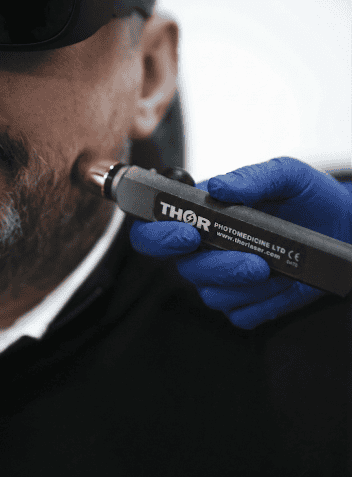
Laser acupuncture acts simultaneously on two complementary levels, which gives it exceptional therapeutic efficacy. On the one hand, on an energetic level, balance activity meridians and Chinese bodies and facilitates the circulation of Qi, contributing to the restoration of circulation between internal organs. On the other hand, At a biological level, light energy penetrates tissues and activates cellular processes through the mechanism of photobiomodulation.
This process determines increased ATP production at the mitochondrial level, reducing inflammation and improving microcirculation, which translates clinically into reduced pain, muscle relaxation, and acceleration of regeneration processes. This dual energetic and biological action represents one of the most important explanations for the efficiency of laser acupuncture in modern medical practice.
Advantages of laser acupuncture
🔶 1. Completely painless and non-invasive therapy
One of the most significant advantages of laser acupuncture is that it completely eliminates the need for needles, making it Ideal for sensitive, anxious patients, or those who avoid invasive procedures.
Acupuncture point stimulation is achieved through controlled light energy without tissue penetration and discomfort. This characteristic significantly increases the acceptability of the therapy and allows for repeated application without stressing the patient.
🔶 2. Superior accuracy and reproducibility
Laser technology allows for the delivery of a exact energy doses at each acupuncture point, which offers a much greater level of control compared to classic manual stimulation.
Studies show that photobiomodulation allows for treatment standardization reducing the variability of results and increasing the predictability of therapeutic response. This precision is essential in modern treatments where personalization and consistency are key factors.
🔶 3. Demonstrated anti-inflammatory and analgesic effect
One of the most well-documented effects of laser therapy is its ability to reduce inflammation and pain. By stimulating cellular processes, laser acupuncture helps reduce inflammatory mediators and activate natural pain control mechanisms.
Scientific literature highlights that this method can significantly reduce pain in musculoskeletal conditions, myofascial syndromes, and other chronic pathologies, without the need for associated medication or with reduced requirements.
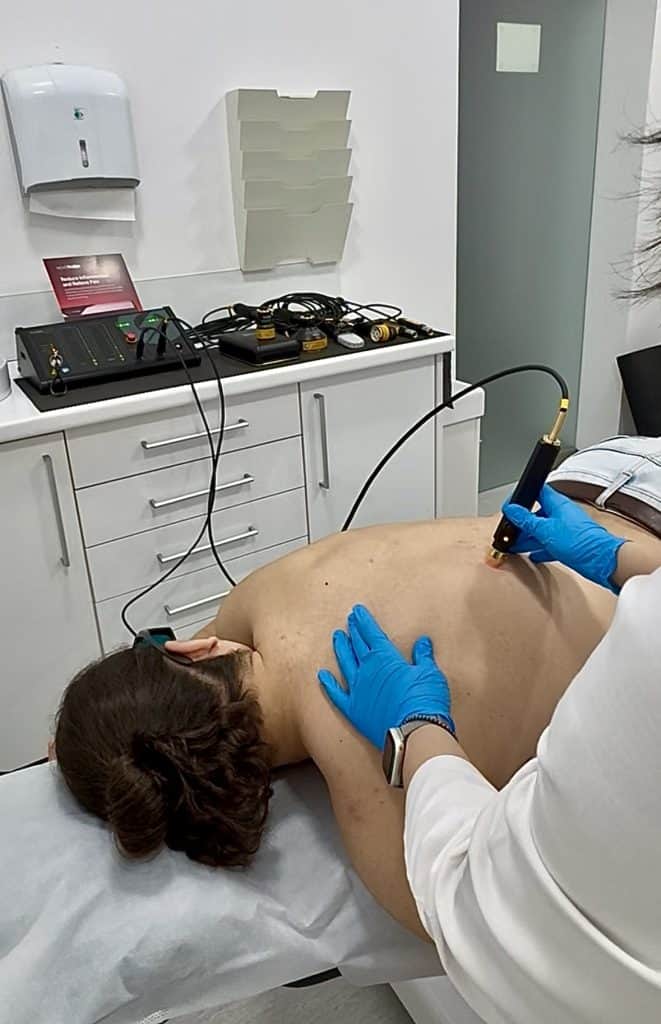
4. Effect on the Autonomic Nervous System
Laser acupuncture does not only act locally, but directly influences the autonomic nervous system, contributing to the balance between the sympathetic and parasympathetic systems. This action explains the therapy's effectiveness in:
- Stress and anxiety
- sleep disorders
- chronic fatigue
- neurovegetative imbalances
Recent studies show that laser acupuncture stimulation can induce measurable changes in heart rate variability, an important indicator of autonomic balance.
🔶 5. Stimulation of tissue regeneration
Through the mechanism of photobiomodulation, light energy stimulates mitochondrial activity and increases ATP production, which accelerates tissue repair and regeneration processes. This effect makes laser acupuncture particularly useful in:
- postoperative recovery
- trauma
- chronic inflammation
- muscle injuries
not only reduces symptoms but also supports healing.
🔶 6. Perfect Integration into Modern Medicine
A major advantage of laser acupuncture is that it easily integrates into complex medical protocols, allowing it to be combined with other therapies without risks or negative interactions. This allows for its use in:
- medical recovery
- Dentistry and TMJ disorders
- pain therapy
- Functional rehabilitation programs
🔶 7. High Safety and Minimal Risk
Laser acupuncture is considered a safe method with an extremely low risk profile when used correctly. It does not involve:
- risk of infection
- tissue trauma
- significant adverse effects
This safety makes it suitable for a wide range of patients, including those with increased sensitivity or contraindications for other therapies.
🔶 8. Comfortable patient experience
Beyond clinical efficacy, the patient experience is essential. Laser acupuncture is perceived as a relaxing therapy, where discomfort is absent or minimal, and the calming effect appears progressively. Patients frequently describe:
- deep relaxation
- tension reduction
- The feeling of „resetting” the body
👉 This aspect increases long-term compliance and effectiveness.
🔷 Technology Used - THOR Medical Laser
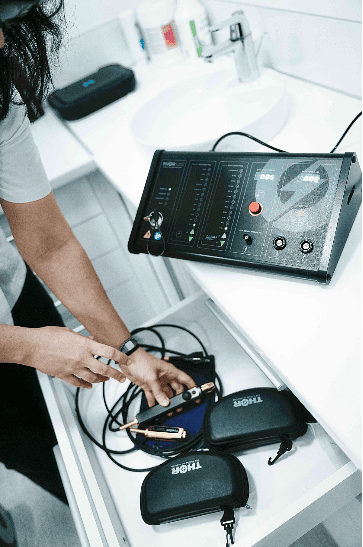
Within the clinic, we use the THOR laser having medical studies internationally recognized for their efficiency and safety in the therapy of pain and musculoskeletal conditions. These devices allow controlled delivery of light energy at the acupuncture point level, with parameters adapted to each patient, depending on the pathology and therapeutic goals.
The precision of these systems allows not only for the stimulation of classic points but also for their integration into complex treatment protocols, in which neuromodulation, inflammation reduction, and tissue regeneration are pursued simultaneously, in a coherent and personalized approach.
Clinical indications and applicability
Laser acupuncture is used for a wide range of conditions, especially where pain, inflammation, and nervous system imbalance play a central role. Patients with muscle, neck, or lower back pain frequently experience progressive symptom relief as tension is reduced and the body's regulatory mechanisms are reactivated.
In particular, this therapy is of special value in the treatment Temporomandibular joint disorders, where the neurological and muscular component is essential. By stimulating specific points, relaxation of the masticatory muscles, pain reduction, and improvement of joint function are achieved.
Additionally, laser acupuncture is effective for stress, anxiety, and sleep disorders, by helping to regulate the autonomic nervous system and induce a state of balance and calm. systemic therapies. A classification of pathologies is described below:
🔶 1. Painful and musculoskeletal conditions
One of the most important indications for acupuncture is pain, regardless of location or mechanism. Through its anti-inflammatory and neuromodulatory effects, the therapy helps reduce muscle tension and normalize the pain response.
Frequently addressed:
- neck and lower back pain
- Muscle cramps and myofascial syndromes
- joint pain
- Headaches and migraines
- Persistent chronic pain
In this context, laser acupuncture becomes an effective and non-invasive alternative to drug therapies.
🔶 2. Temporomandibular Joint (TMJ) Disorders
In TMJ pathology, where the neurological, muscular, and emotional components overlap, laser acupuncture plays an essential role.
This contributes to:
- relaxation of the masticatory muscles
- joint pain relief
- Bruxism relief
- stress-associated component adjustment
This is one of the most effective supportive therapies in an integrated approach to TMJ dysfunction.
3. Nervous system disorders and neurovegetative imbalances
Acupuncture directly influences the autonomic nervous system, contributing to the balance between the sympathetic and parasympathetic systems.
It is indicated in:
- Anxiety and chronic stress
- sleep disorders and insomnia
- chronic fatigue
- Irritability and psychological tension
- neurovegetative imbalances
Patients frequently describe a state of deep calm and improved ability to adapt to stress.
4. Functional digestive disorders
The digestive system is strongly influenced by the nervous system, and acupuncture acts precisely at this regulatory level.
Is used in:
- irritable bowel syndrome
- bloating and abdominal discomfort
- slow digestion
- functional gastroesophageal reflux
- transit disorders
5. Hormonal Imbalances and Infertility
A critically important, often underestimated, field is that of endocrine regulation. Acupuncture can influence:
- menstrual cycle
- Premenstrual syndrome
- Hormonal imbalances
- feminine and masculine fertility
By acting on the hypothalamo-hypophyseal-ovarian axis and the nervous system, the therapy contributes to optimizing reproductive function and creating an environment conducive to conception.
🔶 6. Gynecological and urogenital conditions
Besides infertility, acupuncture is also used for:
- dysmenorrhea (painful menstruation)
- irregular cycles
- perimenopause symptoms
- Pelvic tension
- Urogenital functional disorders
7. Functional respiratory and ENT conditions
By influencing the immune system and inflammatory mechanisms, acupuncture can be useful in:
- allergic rhinitis
- chronic functional sinusitis
- chest tightness
- functional respiratory distress
8. Recovery and regeneration
Laser acupuncture is frequently used in recovery processes due to its effects on tissue regeneration. It is indicated for:
- postoperative recovery
- trauma
- inflammations
- slow healing
accelerates the body's natural repair processes.
🔶 9. Psychosomatic Conditions
In situations where emotions manifest as physical symptoms, acupuncture plays a crucial role. It addresses:
- bruxism
- chronic muscle tension
- pains without a clear structural cause
- recurrent functional disorders
Therapy acts on the root cause: nervous system imbalance.
10. General Health Regulation and Prevention
Beyond pathology, acupuncture is also used for:
- increasing resilience to stress
- Improving sleep
- optimization of bodily functions
- maintaining overall balance
👉 This is a regulation therapy, not just a treatment.
Patient Experience
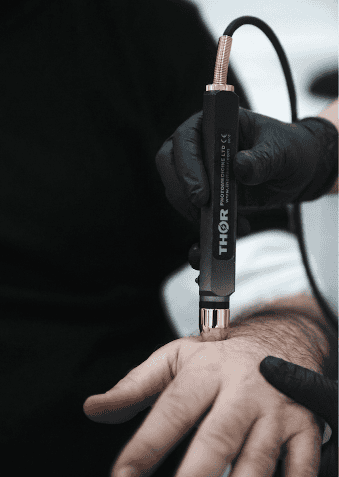
The treatment is complete pain and easy to tolerate, making it suitable for all patient groups, including those who are sensitive or anxious. During the session, the patient may feel a slight warming sensation, or in many cases, perceive nothing at all, but the relaxation effect appears progressively as the nervous system responds to stimulation.
After treatment, patients frequently describe a state of calmness, reduced muscle tension, and improved mental clarity, and in the case of chronic conditions, the effects are consolidated from one session to the next.
Laser acupuncture represents a modern form of integrative medicine in which the principleTraditional methods are supported and amplified by contemporary technology. By combining energy stimulation with the biological effects of photobiomodulation, this method offers an effective, safe, and deeply tailored approach to the needs of the modern patient.
Schedule an evaluation
If you are experiencing pain, tension, or imbalances that affect your quality of life, laser acupuncture can be an effective and gentle solution, tailored to your body. At Expert Laser Center, treatment is personalized according to your real needs, and each session is part of a coherent medical strategy, oriented towards results.
Schedule a consultation and discover how we can restore your body's balance, without pain and without invasive methods.

 Romanian
 English