
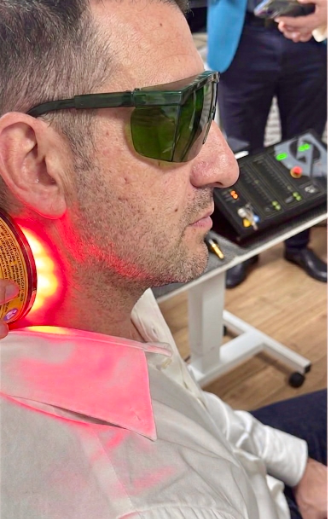
If, just a few decades ago, someone had claimed that light could influence how a cell functions, the statement would likely have been met with skepticism. Today, however, this idea no longer belongs to the realm of science fiction but represents a subject intensely studied in laboratories and university centers around the world. Researchers are trying to understand how certain wavelengths of light can influence cellular energy production, inflammatory responses, and mechanisms involved in tissue repair. This field is known as photobiomodulation (Photobiomodulation – PBM) and it's one of the most fascinating examples of how physics and biology meet in modern medicine.
In the office, one of the most frequent questions I get is: „Does the laser really heal?” Every time my answer is the same: the laser heals. The organism is what heals itself. Light cannot create new tissue or repair an injury on its own.
What it can do is support the biological mechanisms by which our body naturally tries to heal itself. The difference may seem subtle, but it is essential. This very idea is the basis of modern regenerative medicine: we do not force the body to do something against its physiology, but we try to provide it with the optimal conditions for natural healing processes to occur as efficiently as possible.
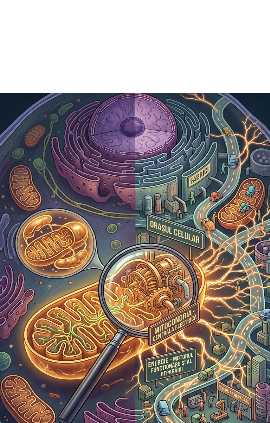
To understand how this is possible, we need to look inside each cell. I like to explain this mechanism using a simple comparison. Imagine that each cell is a small city. In that city, there are roads, factories, transport systems, and teams that permanently repair what is damaged. For all of this to work, energy is needed. If energy is lacking, activity slows down, and repair processes become increasingly difficult. At the center of this city is a real power plant: the mitochondrion.
Mitochondria produce ATP (adenosine triphosphate), a molecule that supplies the energy needed for almost all biological processes. Every muscle contraction, every nerve impulse, every cell division, and every stage of healing depend, to some extent, on ATP. When tissue is traumatized or inflamed, the energy demand increases considerably. The body tries to repair the affected area, but this activity requires a high consumption of energy. Therefore, researchers have begun to wonder if there are ways to support mitochondrial function.
This is where photobiomodulation comes in. Numerous studies suggest that certain wavelengths from the red and near-infrared light spectrum can be absorbed by an enzyme present in the mitochondrial respiratory chain, called Cytochrome c oxidize. This interaction can influence ATP production and trigger a series of complex biological reactions involved in regulating inflammation, oxidative stress, and cell signaling. In other words, light does not act as a drug or a mechanical stimulus, but as a biological signal that can modify how cells respond to aggression and carry out their functions.
Certainly, this explanation is a simplification of extremely complex processes. In reality, photobiomodulation effects are not limited to increasing ATP production. Research has shown that light can influence the expression of certain genes, the activity of growth factors, nitric oxide production, mitochondrial function, and cell-to-cell communication. All these changes contribute to creating a biological environment more conducive to healing. However, it's important to understand that the body remains the main player in this process. Light does not replace the body's regenerative capacity; it supports it.
This is also why photobiomodulation is being studied in an impressive number of medical fields. In musculoskeletal recovery, it is being investigated for its role in pain and inflammation control. In sports medicine, it is used to support recovery after exertion or trauma. In dentistry, there are well-documented applications in the management of oral mucositis, postoperative pain, and soft tissue healing. In dermatology, it is being researched for its effects on the skin repair process and collagen remodeling. In neurology, interest is focused on its potential effects on nerve regeneration and functional recovery after certain injuries. Not all of these applications benefit from the same level of evidence, but the number of published studies continues to grow at an impressive rate.
In recent years, scientific literature dedicated to photobiomodulation has seen spectacular development. Thousands of articles have been published, including randomized clinical trials, meta-analyses, and guidelines developed by international scientific societies. These studies have demonstrated something extremely important: the results of therapy depend heavily on the parameters used. In photobiomodulation, it is not enough to have a device that produces light. The wavelength, administered energy, power density, exposure duration, size of the treated surface, and biological characteristics of the tissue all matter. A seemingly small difference between these parameters can significantly alter the biological response.
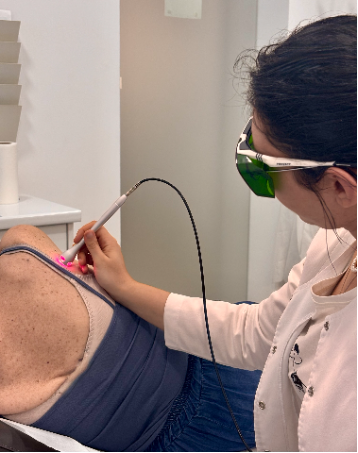
This is why two devices marketed under the generic name „therapeutic laser” can have completely different performance and results. In evidence-based medicine, the focus is not on the existence of a device, but on the use of scientifically validated protocols adapted to each patient. Technology is important, but the clinician's experience and understanding of biological mechanisms are just as important.
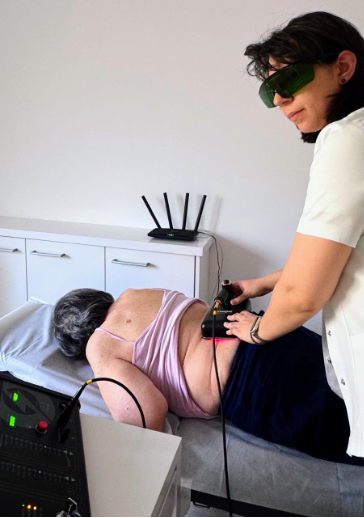
The Expert Laser Center Our approach starts precisely from this philosophy. We do not use photobiomodulation as a standard procedure applied identically to all patients. Each therapeutic plan is built after careful clinical evaluation and is adapted to the pathology, the stage of the healing process, and the patient's functional goals. The system Giant Laser Cluster (GLC) developed by THOR Photomedicine allows us to treat extensive anatomical surfaces and integrate photobiomodulation into a complex recovery protocol, based on the latest scientific evidence. For us, technology is not just high-performance equipment, but a continuous investment in education, research, and the implementation of validated protocols, so that patients in Romania can benefit from treatments aligned with international standards.
Expert Laser Center operates within the same medical ecosystem as Innovation Medical Center, associated center and European partner of Sigmund Freud University Vienna and and AALZ Aachen, being affiliated International Society for Laser Dentistry (ISLD). Our activity is inspired by the research and educational programs developed by THOR Photomedicine, a world leader in the field of medical photobiomodulation.
The science of healing
Perhaps the most beautiful lesson photobiomodulation offers us is one much deeper than simply using a laser. It reminds us that the human body has extraordinary self-regulation and regeneration mechanisms. Modern medicine isn't just about increasingly sophisticated treatments, but also about understanding how we can support these natural mechanisms. Light doesn't create healing, nor does it replace biology. Instead, when used correctly and within the context of a complete medical evaluation, it can become an ally to cells in their natural repair process. And this is, in essence, the philosophy underlying regenerative medicine and the work done at Expert Laser Center.
Frequently Asked Questions about Photobiomodulation
Photobiomodulation (PBM) is a therapy that uses red and near-infrared light to influence biological processes at the cellular level. It does not produce significant heat and does not destroy tissues. Instead, it can support mechanisms involved in cellular energy production, inflammation regulation, and tissue repair.
No. They are two completely different technologies. The surgical laser uses high energies to cut, vaporize, or coagulate tissues. Photobiomodulation uses low energies, without a cutting or burning effect, aiming to stimulate natural biological processes.
Certain wavelengths are absorbed by structures within the mitochondria, particularly by cytochrome c oxidase. This process can alter cellular metabolism and support mechanisms involved in ATP production, inflammation control, and tissue regeneration.
No. In most cases, the treatment is completely painless. The patient may feel a slight warmth or, at times, nothing during the application.
It depends on the type of condition, the duration of symptoms, and the individual biological response. Some people notice pain relief after the first few sessions, while in chronic conditions, more sessions are needed to achieve a therapeutic effect.
Numerous studies suggest that photobiomodulation can support the body's natural tissue repair and regeneration processes. However, its effectiveness depends on accurate diagnosis, the selection of therapeutic parameters, and its integration into a comprehensive treatment plan.
Based on available scientific evidence, photobiomodulation is used in the recovery of musculoskeletal conditions, sports medicine, dentistry, pain management, wound healing, certain peripheral neuropathies, and other pathologies where validated indications exist.
When used according to medical protocols and with certified equipment, photobiomodulation has a very good safety profile. Like any medical procedure, there are situations where individual assessment and certain contraindications or precautions are necessary.
This is one of the most frequently asked questions. Currently, scientific literature does not support the use of photobiomodulation directly on active malignant tumors. Instead, there are international guidelines that recommend photobiomodulation for the treatment of certain oncological therapy complications, such as oral mucositis, under well-established conditions and medical supervision.
In most situations, yes. The presence of metal implants is not, in itself, a contraindication for photobiomodulation. However, the indication is established based on the condition being treated and medical evaluation.
Not necessarily. The results depend on the wavelength, administered energy, power density, and the protocol used. Two devices emitting light can have very different biological effects. That's why choosing the equipment and therapeutic parameters is essential.
Not all photobiomodulation systems are identical. They differ in the technology used, the available wavelengths, the emitted power, and the ability to treat small or large areas. In evidence-based medicine, equipment selection should be made based on the clinical indication and scientifically validated protocols.
Pain can have very different causes, even if the symptoms are similar. A complete medical evaluation allows for the correct diagnosis and selection of appropriate treatment. Photobiomodulation is a component of a personalized therapeutic plan, not a treatment applied identically to all patients.
The treatment always begins with a comprehensive medical evaluation. Depending on the pathology, this may include a physical examination, functional assessment, and, when indicated, complementary investigations. The photobiomodulation protocol is then individualized and integrated into a therapeutic plan tailored to each patient's goals.
Myth or reality?
„The laser heats and burns the tissues.” — With. Photobiomodulation uses low energies and does not produce the effects of a surgical laser.
„If I don't feel anything during treatment, it means it's not working.” — With. The effects of photobiomodulation are biological and do not depend on the sensations perceived during the session.
„More energy means better results.” — With. In photobiomodulation, there is a „therapeutic window.” Both too low and too high doses can reduce treatment effectiveness.
„Photobiomodulation replaces medical recovery.” — With. This is a complementary method that shows its best benefits when integrated into a comprehensive recovery program.
The body has an extraordinary capacity for regeneration, but each tissue follows its own biological rhythm.
The role of modern medicine is not to force these processes, but to create optimal conditions for them to occur as efficiently and safely as possible. At Expert Laser Center, each treatment is built around this principle: supporting natural healing mechanisms through scientifically validated technologies and personalized, evidence-based protocols.
📍 Expert Laser Center – Bucharest
🌐 Website: https://expertlaser.ro
📞 Telephone +40753666111
Author: Dr. Anca Adam
Specialist in Physical Medicine and Rehabilitation, neurological recovery compartment, Competence in Traditional Chinese Medicine (Tai Yuan China), Expert in Laser Acupuncture & Medical Thermography (Barcelona, Spain) – LSO (Laser Safety Officer) AALZ Aachen Germany

 Romanian
 English