
What does modern medicine say about tendon regeneration?
„Why does it still hurt if the tendon was supposed to have healed?”
This is one of the most frequent questions we hear in the office.
The patient is following the recommended treatment, resting, and adhering to the full physical and kinesitherapy program, but after a few weeks or months, the pain persists. This then gives the impression that the tendon „can no longer heal” or is „permanently worn out.”.
In reality, most tendons have the ability to regenerate. The difference is that they do so much more slowly than other tissues in the body.
Understanding why this is happening is the first step towards effective treatment.
Why do tendons heal so slowly?
If we cut our skin, we notice that the wound begins to close in a few days. If we injure a muscle, recovery is usually relatively quick.
Instead, tendons behave completely differently.
The explanation is simple: they are extremely strong structures built to transmit force between muscle and bone. However, it is precisely this strength that comes with a significant biological compromise – tendons have reduced vascularization, receiving nourishment largely from the vessels in their connective sheaths and through diffusion from neighboring tissues.
In other words, I receive less blood than other tissues. And blood is what brings oxygen, nutrients, and the cells involved in regeneration.
A simple comparison can explain this phenomenon.
Imagine two cities. One is connected by a multi-lane highway, and the other has a single narrow access road. If you need to transport reconstruction materials after an earthquake, which one will be rebuilt faster?
That's exactly how the body works.
A tendon receives its „building blocks” more slowly than a muscle or skin.
Tendons healing is not a single process
Many people imagine that a tendon heals gradually, in a linear fashion. In reality, regeneration goes through three distinct stages.
The first one is inflammatory phase which begins immediately after injury. Contrary to myths, inflammation is not always a bad thing. It represents the body's way of sending the necessary cells to begin tissue repair.
Next phase proliferative, in which specialized cells called tenocytes begin to produce new collagen fibers.
Finally appears remodeling phase which can take months. In this stage, the collagen fibers reorganize and begin to gain the necessary strength to withstand daily stresses again.
Specialized literature shows that this stage can continue even at 12 months after some tendon injuries. (Ackermann & Hart, Nature Reviews Rheumatology; Sharma & Maffulli, Journal of Bone and Joint Surgery).
Why does pain sometimes persist?
A surprising aspect is that pain and healing don't always go hand in hand.
There are patients whose tendon is almost completely repaired, but the pain persists. In other cases, imaging shows significant changes, but the patient has very few symptoms.
Today we know that pain is influenced not only by the structure of the tendon, but also by the nervous system, mechanical loading, and how the tissue responds to stress.
Therefore, modern treatment doesn't just aim to „extinguish pain,” but to stimulate quality regeneration and a progressive return to function.
What does modern medicine say about tendon recovery?
In recent years, the treatment of tendinopathies has changed significantly.
If in the past the recommendation was often prolonged rest, today studies show that a tendon needs controlled charging, adapted to each stage of healing.
Progressive therapeutic exercises remain one of the most well-supported interventions for most tendinopathies, being recommended by international guidelines.
In parallel, biological and physical therapies are being investigated for their ability to support tissue regeneration.
What role can laser therapy have?
One of the most studied methods in recent years is photobiomodulation Plan de Beneficios Médicos after LLLT laser therapy.
Unlike surgical lasers, it does not heat or destroy tissues.
Light is absorbed by the mitochondria—the cell's „powerhouses”—where it stimulates the production of ATP, the molecule that supplies the energy needed for cellular repair processes.
Experimental and clinical studies have shown that PBM can influence tenocyte proliferation, collagen synthesis, and the inflammatory response, contributing to a biological environment favorable for regeneration.
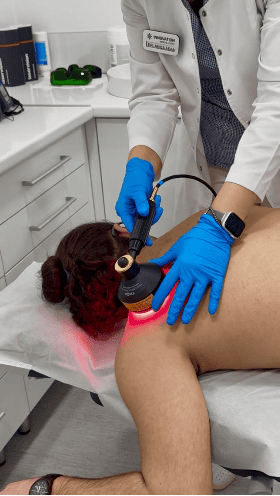
However, the results depend on the correct choice of wavelength, dose, and timing of application, which is why the treatment must be individualized. (Cotler et al., Photomedicine and Laser Surgery; Bjordal et al.; World Association for Photobiomodulation Therapy).
How do we approach recovery at Expert Laser Center?
The Expert Laser Center The treatment of tendinopathy begins with a comprehensive evaluation, not with the application of a standard protocol.
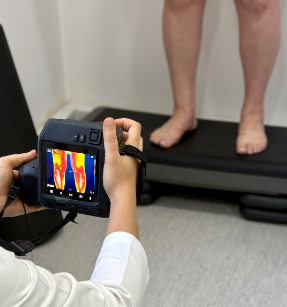
Clinical analysis aims to identify the cause of overuse, assess mobility, muscle function, and the biomechanical chains involved. When necessary, the evaluation is supplemented by medical thermography, musculoskeletal ultrasound, and functional analysis, to understand not only where it hurts, but also why.
The therapeutic plan may include high-performance laser therapy (PBM), progressive therapeutic exercises, medical rehabilitation, and recommendations for optimal tendon loading. The goal is not only pain reduction but also the promotion of quality biological healing and the prevention of recurrence.
International Expertise and Evidence-Based Medicine
The Expert Laser Center, each treatment protocol is developed based on the international scientific literature and the principles of evidence-based medicine (Evidence-Based Medicine). The selection of wavelengths, doses, and therapeutic parameters is not based on standardized protocols applied to all patients, but rather on individual clinical assessment and data available in the scientific literature.
The center uses state-of-the-art technologies for photobiomodulation and functional recovery, and the protocols it employs are developed in accordance with the recommendations of international scientific societies and published research in the field of medical laser therapy.
Academic Collaborations and European Standards
Expert Laser Center collaborates within the same healthcare ecosystem with Innovation Medical Center, an affiliated center and European partner of Sigmund Freud University Vienna and AALZ Aachen.
These academic collaborations facilitate ongoing access to continuing medical education programs, exchanges of expertise, and clinical protocols aligned with the highest European standards in laser medicine, functional rehabilitation, and regenerative medicine.
Technology inspired by international research
The photobiomodulation protocols used in the Expert Laser Center are grounded in one of the most solid scientific foundations currently available, including the research and educational programs developed by THOR Photomedicine, an international leader in the field of laser therapy and photobiomodulation.
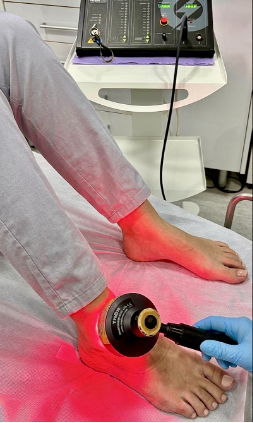
Numerous clinical and experimental studies have demonstrated the role of photobiomodulation in supporting the biological processes involved in tissue regeneration, reducing inflammation, and managing pain, when the treatment is administered using appropriately selected parameters and for indications validated by the scientific literature.
Why is the Expert Laser Center's approach different?
The Expert Laser Center Laser therapy is not a standalone treatment, but rather a component of a comprehensive recovery and regeneration plan. Each patient undergoes a complete functional evaluation, and the treatment is tailored to the type of affected tissue, the biological stage of healing, and the patient’s individual functional goals.
For us, technology is not just equipment, but a continued investment in medical excellence, innovation, and access for Romanian patients to scientifically validated therapies used in leading medical centers worldwide.
Frequently Asked Questions
In most cases, no. Complete rest can temporarily reduce pain, but a tendon needs progressive and controlled loading to adapt and regenerate.
Laser therapy does not replace the natural healing process, but it can support the biological mechanisms involved in regeneration when used as part of an evidence-based therapeutic plan.
It depends on the type of tendon affected, how long the injury has been present, and adherence to the rehabilitation program. Some tendinopathies improve within a few weeks, while others require months of treatment and monitoring.
The Science of Healing
A tendon doesn’t heal slowly because the body „can’t,” but because its biology is different. Understanding these mechanisms completely changes the way we view recovery. We aren’t looking for quick fixes, but rather interventions that respect and support the body’s natural regenerative processes.
Tissues don't heal just because time passes. It heals when the body has the necessary biological conditions for regeneration: cellular energy, adequate vascularization, inflammation control, and appropriate mechanical stimuli.
Expert Laser Center’s mission is to support these natural mechanisms through scientifically validated technologies and personalized, evidence-based medical protocols. Because, in modern medicine, true recovery means more than just the disappearance of pain. It means that the tissue regains its function, strength, and ability to cope with movement once again.
📍 Expert Laser Center – Bucharest
🌐 Website: https://expertlaser.ro
📞 Telephone +40 790 673 866
Author: Dr. Anca Adam
Specialist in Physical Medicine and Rehabilitation, neurological recovery compartment, Competence in Traditional Chinese Medicine (Tai Yuan China), Expert in Laser Acupuncture & Medical Thermography (Barcelona, Spain) – LSO (Laser Safety Officer) AALZ Aachen Germany

 Romanian
 English