
What are stem cells, actually?
In recent years, the term „stem cells” has become extremely popular, being associated with the idea of regeneration, rejuvenation, and accelerated recovery. In reality, things are more complex and much more interesting than the spectacular promises sometimes found in advertisements.
Stem cells are a special category of cells that have the ability to multiply and participate in the body's natural repair and regeneration processes. Among these, mesenchymal stem cells (MSCs), present in bone marrow, adipose tissue, periosteum, dental pulp, and other tissues, play an important role.
These cells are not „magic cells” that can transform any organ, but they can contribute to essential biological processes such as:
- Bone regeneration;
- soft tissue repair;
- support of angiogenesis (formation of new blood vessels);
- modulation of inflammation;
- supporting the natural healing processes.
What is interesting is that a large part of their effects do not come from direct transformation into other cell types, but from the biological substances they secrete: growth factors, cytokines, exosomes, and molecules involved in cell communication.
What is photobiomodulation?
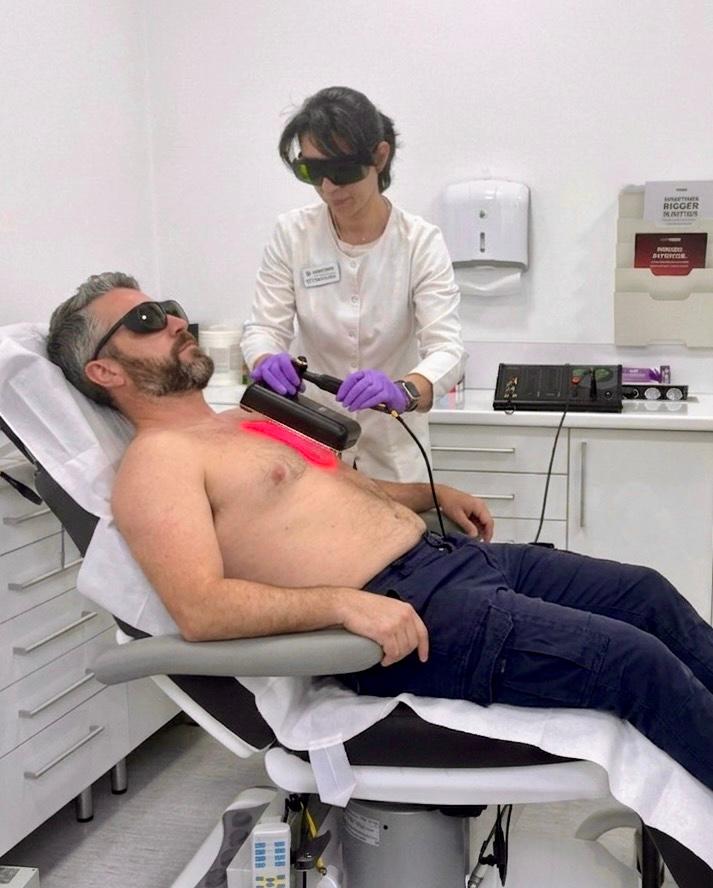
Photobiomodulation (PBM), also known as low-level laser therapy (LLLT) or red and near-infrared light therapy, is the controlled use of light to stimulate natural biological processes.
Numerous studies have demonstrated that certain wavelengths can influence mitochondrial activity, increasing ATP production (cellular energy), regulating oxidative stress, and promoting tissue repair processes.
In other words, photobiomodulation introduces nothing into the body and does not genetically modify cells. It uses light to support existing biological mechanisms.
Can a laser influence stem cells?
This is the question that has generated major interest in the scientific community.
In the last two decades, numerous studies have been published suggesting that photobiomodulation can influence:
- mesenchymal stem cell proliferation;
- their migration to affected areas;
- their differentiation into specific cell lines;
- metabolic and mitochondrial activity;
- Secretion of factors involved in regeneration.
It is important to understand that photobiomodulation is NOT stem cell therapy and does NOT replace regenerative medicine procedures based on cell harvesting and administration. Instead, there is evidence that light can influence the behavior of stem cells already present in the body.
Why is there talk about the sternum and tibia?
Bone marrow represents one of the main sources of mesenchymal stem cells. In adults, areas such as:
- sternum;
- manubrium;
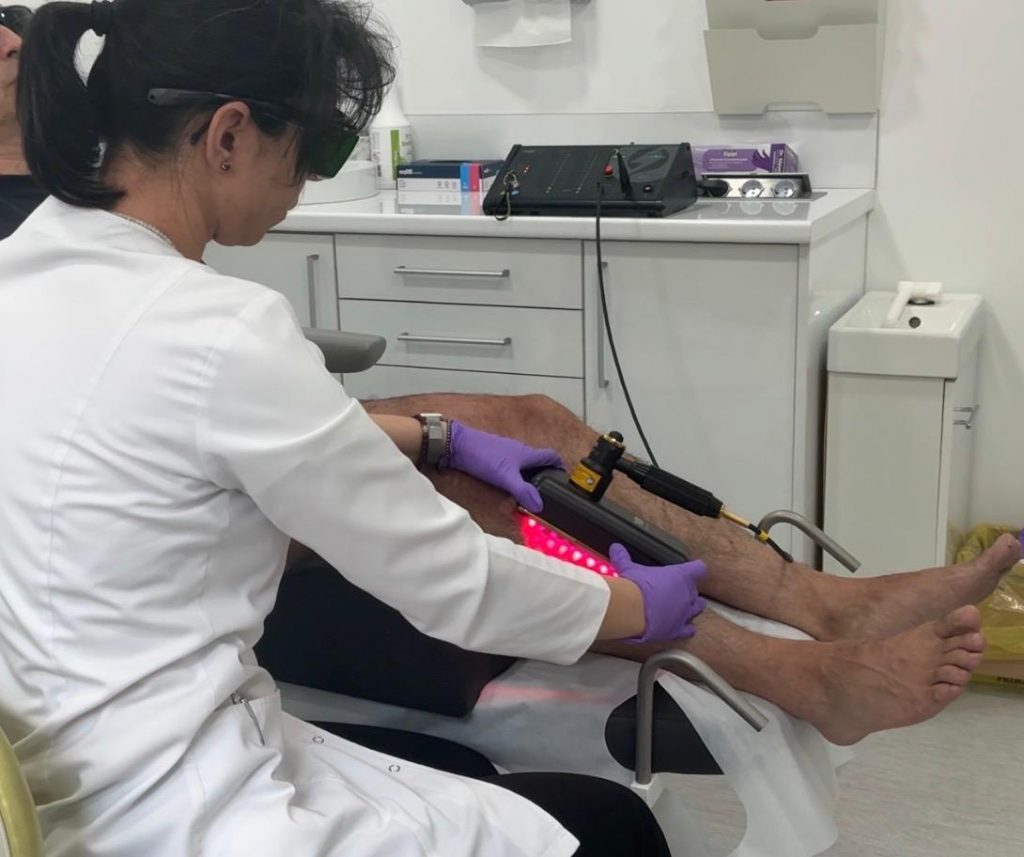
- Proximal tibia;
contain active bone marrow and have been investigated in studies on systemic photobiomodulation.
The modern concept is called „remote photobiomodulation” and assumes that applying light to a certain region can generate observable biological effects at a distance. This is a rapidly developing field and represents one of the most interesting research directions in non-invasive regenerative medicine.
What do studies say? What do we know for sure and what don't we know yet?
The study that attracted the attention of the scientific community
One of the most cited studies in recent years was published in the journal Scientific Reports by Eroglu and colleagues in 2021. The authors investigated the effect of photobiomodulation on aged mesenchymal stem cells from bone marrow.
What did they demonstrate?
The study showed that PBM can improve the mitochondrial function of aged MSCs and increase their proliferative capacity. The authors described this effect as a „cellular rejuvenation” process, observing a partial restoration of biological function affected by aging.Nature)
What has NOT been demonstrated?
The study was conducted on experimental models and does not demonstrate that laser application in humans automatically produces tissue regeneration or generalized biological rejuvenation.
This is a fundamental difference between experimental data and clinical application.
Can photobiomodulation stimulate bone marrow?
Several research groups have investigated the application of photobiomodulation to areas rich in bone marrow, such as the sternum and the proximal tibia. The hypothesis is that influencing the medullary niche has systemic biological effects.
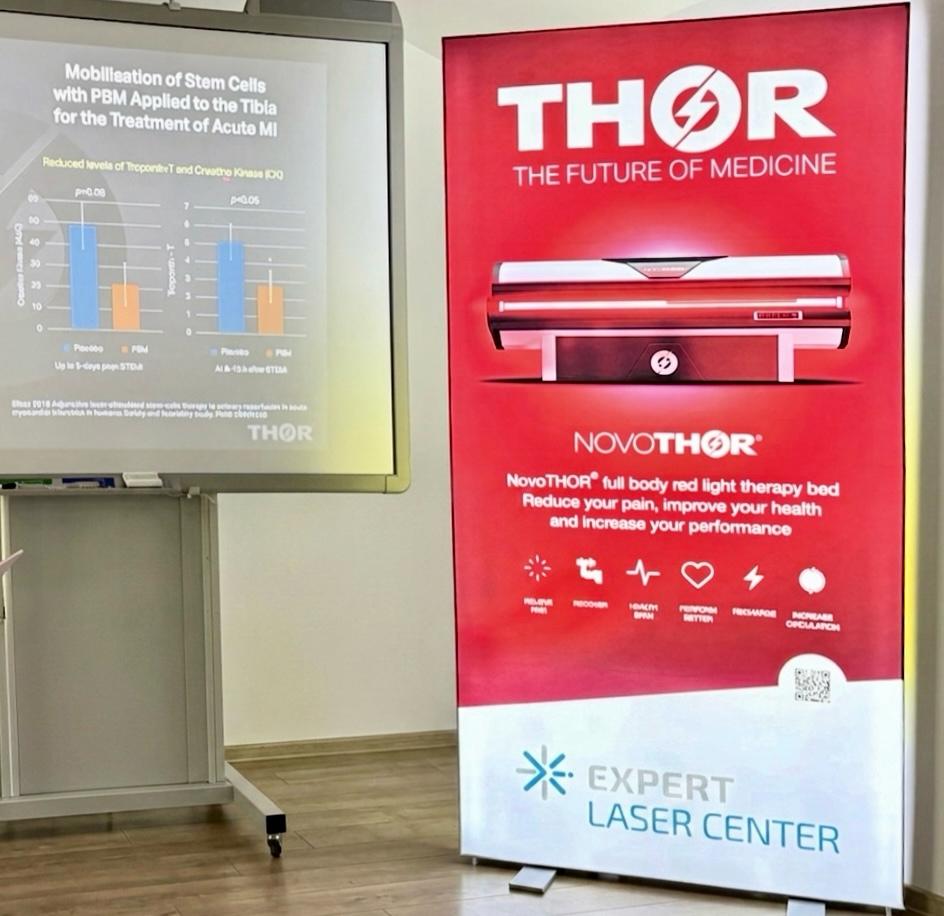
A pilot clinical study published in the Journal of Interventional Cardiology evaluated the use of photobiomodulation applied to the tibial area in patients with acute myocardial infarction treated with angioplasty. The authors concluded that the method is safe and feasible and observed biological signals suggestive of a possible cardioprotective effect.PubMed)
What needs to be understood correctly?
This study does NOT demonstrate that the laser „produces” stem cells, nor that it represents a stem cell therapy. It shows that photobiomodulation can influence the systemic biological response and justifies larger clinical studies.
We have solid evidence for:
✔ anti-inflammatory effects; (jkslms.or.kr)
✔ stimulating healing processes;
✔ effects on cellular metabolism;
influencing stem cell activity;
✔ Supports bone and tissue regeneration.
Still being studied:
✔ extent of systemic effects;
✔ the actual degree of stem cell mobilization in humans;
✔ optimal dosages;
✔ ideal protocols;
✔ very long-term effects.
Therefore, photobiomodulation should not be presented as a „miraculous stem cell therapy,” but rather as a modern, research-backed medical technology that influences biological processes involved in regeneration.
Technology used at Expert Laser Center
At Expert Laser Center, we use THOR technology, one of the most respected and studied medical photobiomodulation systems in the world, recognized for its contribution to the development of evidence-based medicine in the field of light therapy.
THOR systems are used in the clinical and research activities of prestigious international academic and medical institutions such as Harvard Medical School, Massachusetts Institute of Technology (MIT), University of Pennsylvania, and New York University, alongside military organizations in the US and UK, Olympic teams, elite athletes, and leading medical centers worldwide.
By implementing this cutting-edge technology, Expert Laser Center ranks among the medical centers that bring to Romania one of the most advanced photobiomodulation platforms available internationally. Our mission is to provide patients with access to modern, non-invasive, and scientifically based therapies inspired by the same research directions and clinical practices used in some of the world's top-performing medical and university centers.
For us, technology is not just equipment, but a continuous investment in medical excellence, innovation, and Romanian patients' access to therapeutic standards at the forefront of regenerative medicine and modern recovery.
Frequently Asked Questions
No. Photobiomodulation does not produce new stem cells and does not genetically modify the body. It influences the activity of already existing cells.
No. These are two completely different concepts. Photobiomodulation uses light, while cell therapy involves the actual use of stem cells.
Yes. Numerous experimental and clinical studies support the biological effects of photobiomodulation on regeneration processes and on the behavior of mesenchymal stem cells.
No. The treatment is non-invasive and painless.
The indication should be determined individually, depending on the patient's diagnosis, medical history, and therapeutic goals.
No, it represents a complementary method, integrated into a personalized therapeutic plan.
Conclusion
The idea that light can influence the regenerative processes of the body is no longer the domain of science fiction. At the same time, it's important to distinguish between scientific reality and exaggerated promises.
Current data suggests that photobiomodulation can support biological processes involved in regeneration, healing, and inflammation modulation, including by influencing the behavior of mesenchymal stem cells. Research is ongoing, and this direction represents one of the most promising areas of modern non-invasive regenerative medicine.
At Expert Laser Center, we believe the future of medicine isn't about more aggressive treatments, but smarter therapies. Photobiomodulation, regenerative medicine and Technologies based on scientific evidence represent directions that change the way we understand recovery and healing. Our role is to bring these innovations closer to patients, in a responsible, personalized, and medically grounded manner.
📍 Expert Laser Center Bucharest
🌐 Website: https://expertlaser.ro
📞 Telephone: +40 790 673 866
Author: Dr. Anca Adam, Specialist in Physical Medicine and Rehabilitation, neurological recovery and ATM/TMJ dysfunction department, Laser Acupuncture Expert & Competence in Traditional Chinese Medicine (Tai Yuan China), Medical Thermography (Barcelona, Spain) – LSO (Laser Safety Officer) AALZ Aachen Germany.

 Romanian
 English