
“Doctor, they told me I have a spur." calcaneal. Does that mean a bone is stabbing my heel?”
This is, without a doubt, one of the most common questions I hear in the clinic. Almost always, the patient comes with the same conclusion: „I have a spur, and that's why it hurts.”
Surprisingly, in many cases, this is not the whole story.
In fact, one of the most widespread myths about heel pain is that penis calcaneal This is the cause of the pain. However, modern medicine shows us that things are much more complex. Many people have a visible heel spur on an X-ray and have never felt pain. At the same time, there are patients with intense pain, typical for plantar fasciitis, without the X-ray revealing a significant spur.
So, if the spur isn't always to blame, then what hurts?
What exactly is the plantar fascia?
To understand where the pain comes from, we need to know a little about foot anatomy.
The plantar fascia is a thick band of connective tissue that originates from the bottom of the heel bone (calcaneus) and extends to the base of the toes. It functions as an extremely strong cable, supporting the arch of the foot and helping to distribute the forces that occur with each step.
Every time we walk, run, or jump, the plantar fascia takes on an important portion of our body weight. Normally, this structure is strong enough to support millions of steps throughout a lifetime. However, when the demand becomes too great or when the tissue loses its ability to adapt, small repetitive injuries can occur which, over time, generate pain.
Why does the first step in the morning hurt so much?
This is the symptom that best differentiates plantar fasciitis from other causes of heel pain.
Most patients describe the same experience: they get out of bed, and the first step is extremely painful. After a few minutes of walking, the pain starts to decrease. If they sit for a long time again and then get up, the pain returns.
Why?
During the night or long periods of rest, the plantar fascia remains in a relaxed position. The areas affected by microtears begin to organize, and the tissue becomes less flexible. With the first step, the fascia is suddenly stretched, and this stresses the already sensitized area. After a few minutes of walking, the tissue warms up, becomes more elastic, local circulation increases, and the pain temporarily subsides.
This phenomenon does not mean the problem is solved. It only means that the fascia is currently working more efficiently, despite the existing changes.
Plantar fasciitis or plantar fasciopathy?
In recent years, research has changed how we understand this condition.
For a long time, it was believed that pain arose exclusively from inflammation, which is why the term Plantar fasciitis it has become very well-known. Today, however, we know that in many chronic cases, the inflammatory process is reduced or even absent.
At the microscopic level, degenerative changes of collagen fibers, disorganization of tissue architecture, the appearance of new blood vessels, and changes in cellular metabolism are observed. For this reason, many specialists today use the term Fasciopathy planted, considered closer to biological reality.
This difference is important because it explains why simply reducing inflammation is not always enough to resolve the problem. The goal of modern treatment is to support tissue quality restoration and regain normal fascial function.
Then what is a heel spur?
A heel spur is a bony outgrowth that can form where the plantar fascia attaches to the heel bone. For a long time, it was believed that this bony formation „pricked” the tissues and caused pain.
Today we know that things are not so simple.
Numerous studies have shown that heel spurs can frequently be found in people without any symptoms. In contrast, repetitive traction changes exerted by the plantar fascia on the bone can, over time, favor the formation of this outgrowth. In other words, in many situations the spur seems to be a consequence of chronic overexertion, not the main cause of the pain.
Therefore, simply identifying a spur on an X-ray does not automatically explain the patient's symptoms.
Who is at risk of developing this condition?
Plantar fasciitis occurs more frequently in people who stand for many hours, runners, overweight individuals, or those who suddenly increase their physical activity level. Inadequate footwear, limited ankle mobility, increased tension in the posterior muscle chain, and certain biomechanical peculiarities of the foot can also contribute to the onset of symptoms.
Rarely is there a single cause. Most often, it is the result of the interaction between multiple factors that, over time, exceed the plantar fascia's ability to adapt to stress.
How is the diagnosis established?
The diagnosis is primarily clinical.
The location of the pain, the time of its onset, the physical examination, and functional tests provide the most important information. Musculoskeletal ultrasound can reveal thickening of the plantar fascia, structural changes, or possible partial tears. X-ray is useful for identifying heel spurs and ruling out other bone conditions, but it alone does not establish the cause of the pain.
This is why treatment should not be decided solely based on an X-ray.
How is plantar fasciitis treated?
The good news is that most patients recover without surgery.
Treatment begins with identifying the factors perpetuating fascial strain and an individualized recovery program. Stretching exercises for the plantar fascia and the posterior chain, progressive strengthening exercises for the foot and calf muscles, temporary modification of activities that worsen symptoms, and choosing appropriate footwear are essential components of the treatment.
Depending on each case, plantar orthotics, taping, physical therapies, or other complementary methods integrated into an evidence-based therapeutic plan may also be recommended.
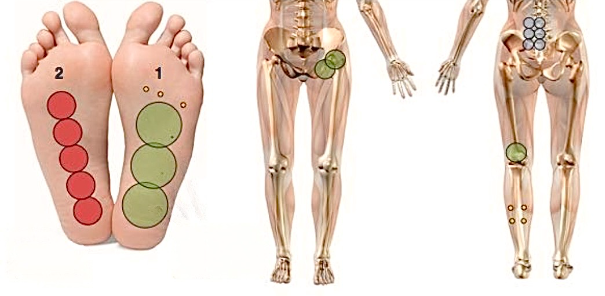
What role can photobiomodulation have?
In recent years, photobiomodulation (PBM) has also been investigated for the treatment of plantar fasciitis.
By using specific wavelengths, light can influence biological mechanisms involved in cellular metabolism, inflammation regulation, and tissue repair. Studies suggest that when used within a correct protocol and associated with a recovery program, photobiomodulation can contribute to pain reduction and improved function.
It is not a miraculous treatment and does not replace therapeutic exercises or the correction of biomechanical factors. However, it can be a valuable tool in a modern, personalized, and evidence-based approach.
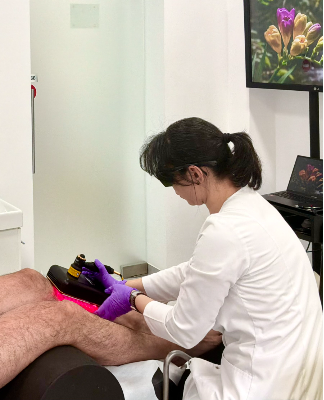
The Expert Laser Center, photobiomodulation is integrated into an individualized therapeutic plan. Protocols are built on the latest scientific evidence and utilize technologies developed by THOR Photomedicine, including the system Giant Laser Cluster, designed for the effective treatment of extensive anatomical surfaces. Expert Laser Center operates within the same medical ecosystem as Innovation Medical Center, associated center and European partner of Sigmund Freud University Vienna and and AALZ Aachen, being affiliated International Society for Laser Dentistry (ISLD).
Myth or reality?
„The pin calcaneal This is the cause of heel pain.” — With. Many people have heel spurs without any symptoms, and the pain is often related to changes in the plantar fascia.
„If the first step in the morning hurts, it's almost certainly plantar fasciitis.” — In many cases, yes, This is one of the most characteristic symptoms, but the diagnosis must be confirmed by a medical consultation.
„If the pain decreases after a few minutes of walking, the problem is solved.” — With. Improvement occurs because the fascia becomes more elastic with movement, but tissue changes may persist.
„Surgery is the only solution.” — With. The majority of patients respond favorably to conservative treatment, and surgery is reserved for carefully selected cases.
In regenerative medicine, we don't just treat the site of pain. We try to understand why the tissue hasn't healed completely and how we can support its natural regenerative capacity.
Frequently Asked Questions
The mere presence of a spur on an X-ray does not establish the diagnosis. Symptoms, clinical examination, and sometimes musculoskeletal ultrasound are essential for differentiation.
In most cases, no. Many people live their entire lives with a heel spur without pain and without needing surgical treatment.
During rest, the plantar fascia relaxes and temporarily loses its elasticity. The first steps suddenly stretch the affected tissue, which causes characteristic pain.
Not necessarily. Adapted physical activity is beneficial, but overexertion can maintain symptoms. The recovery plan must be individualized.
No. The best results occur when light therapy is integrated into a comprehensive recovery program.
The science of healing
Heel pain is not always caused by what is seen on an X-ray. Often, the real problem lies in how the plantar fascia responds to repetitive stress and loses its ability to adapt. Understanding this mechanism completely changes the perspective on treatment: we aim not just to reduce pain, but to restore function and support the body's natural healing processes. This is the essence of modern regenerative medicine and the philosophy behind the work done at Expert Laser Center.
📍 Expert Laser Center – Bucharest
🌐 Website: https://expertlaser.ro
📞 Telephone +40753666111
Author: Dr. Anca Adam
Specialist in Physical Medicine and Rehabilitation, neurological recovery compartment, Competence in Traditional Chinese Medicine (Tai Yuan China), Expert in Laser Acupuncture & Medical Thermography (Barcelona, Spain) – LSO (Laser Safety Officer) AALZ Aachen Germany

 Romanian
 English